- English
- Español
- Português
- русский
- Français
- 日本語
- Deutsch
- tiếng Việt
- Italiano
- Nederlands
- ภาษาไทย
- Polski
- 한국어
- Svenska
- magyar
- Malay
- বাংলা ভাষার
- Dansk
- Suomi
- हिन्दी
- 繁体中文
- العربية
- Indonesia
- فارسی
- Eesti Keel
- Srpski језик
- Afrikaans
- icelandic
- беларускі
- Hrvatski
- ភាសាខ្មែរ
- ქართული
- Maori
- Тоҷикӣ
- O'zbek
- Հայերեն
- Lietuvos
- שפה עברית
- Pilipino
- Türkçe
- Gaeilge
- Norsk
- český
- ελληνικά
- український
- български
- ລາວ
- Latine
- Қазақша
- Slovenský jazyk

What Is Professional Audio System Installation?
A Complete Guide to Designing, Installing, and Optimizing Commercial Audio Systems
Professional audio system installation is the process of designing, connecting, configuring, and optimizing audio equipment to create a reliable and high-performance sound system for commercial, industrial, and public environments.
Unlike simple consumer audio setups, professional audio installation requires careful planning of signal flow, equipment selection, cable connection, system configuration, and acoustic performance. A properly installed professional audio system ensures clear sound reproduction, stable operation, easy control, and long-term reliability.
From conference rooms and classrooms to hotels, theaters, stadiums, and large commercial facilities, professional audio installation plays an essential role in delivering high-quality speech reinforcement and background music experiences.
What Does Professional Audio System Installation Include?
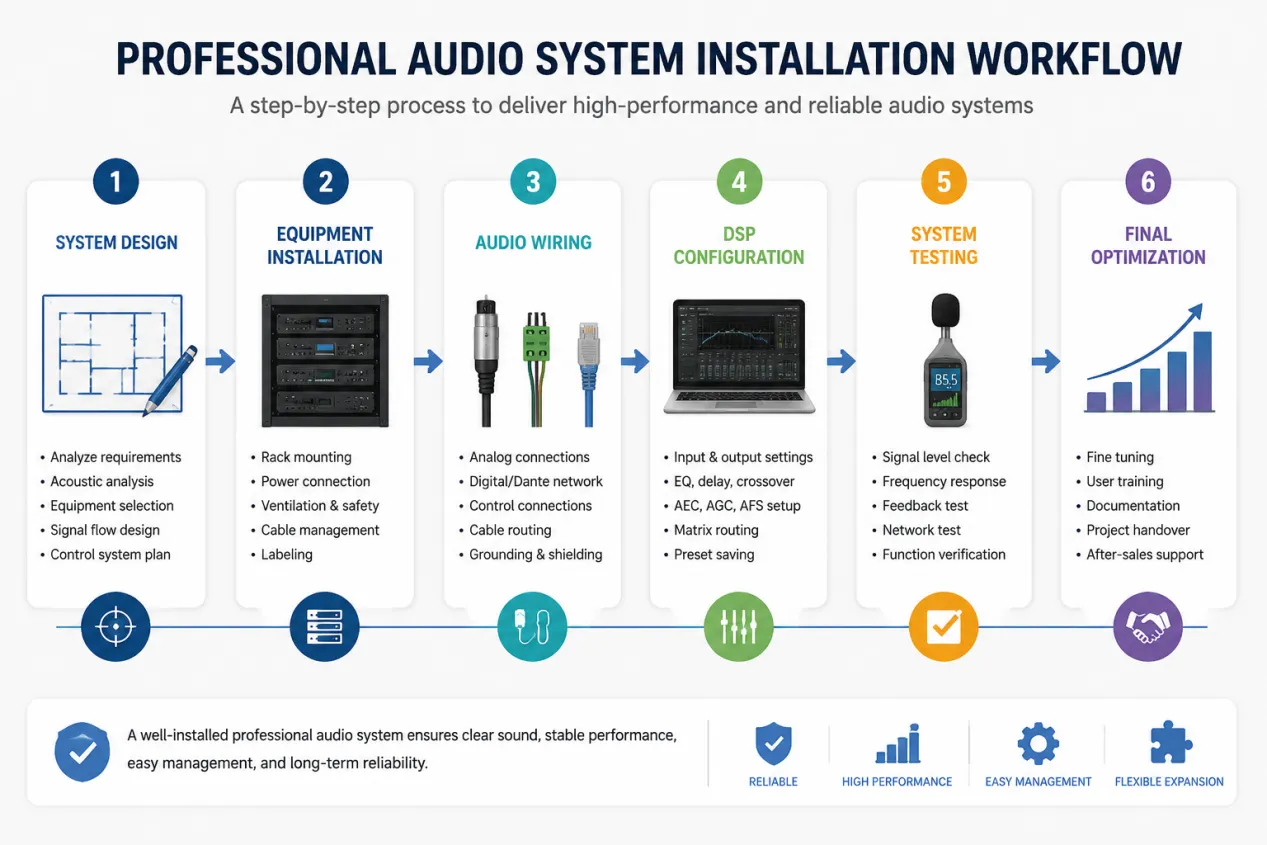
A complete professional audio system installation usually includes several key stages:
1. System Design and Planning
Before installing any equipment, engineers first analyze the application requirements and design the overall audio architecture.
The planning stage usually includes:
· Understanding the room size and acoustic environment
· Determining audio coverage requirements
· Selecting suitable microphones, processors, amplifiers, and speakers
· Designing signal routing and control methods
· Planning cable paths and equipment locations
A well-designed system helps prevent common problems such as insufficient sound coverage, feedback, excessive noise, and difficult maintenance.
For modern commercial audio systems, professional engineers often combine:
· Digital Signal Processors (DSP)
· Digital Audio Matrix Processors
· Dante Network Audio Devices
· Power Amplifiers
· Loudspeaker Systems
to create flexible and scalable solutions.
2. Equipment Installation and Rack Setup
After system planning is completed, the next step is physical installation.
Professional audio equipment is commonly installed in equipment racks or dedicated technical rooms.
Typical installation tasks include:
· Rack mounting audio processors and amplifiers
· Connecting power supplies
· Organizing signal cables
· Labeling input and output channels
· Ensuring proper ventilation and equipment protection
Proper rack installation improves system reliability and makes future maintenance easier.
For example, DSP audio processors are often installed as the central processing unit of the audio system, managing functions such as:
· Equalization
· Compression
· Delay
· Matrix routing
· Feedback suppression
· Acoustic echo cancellation
3. Audio Signal Connection and Wiring
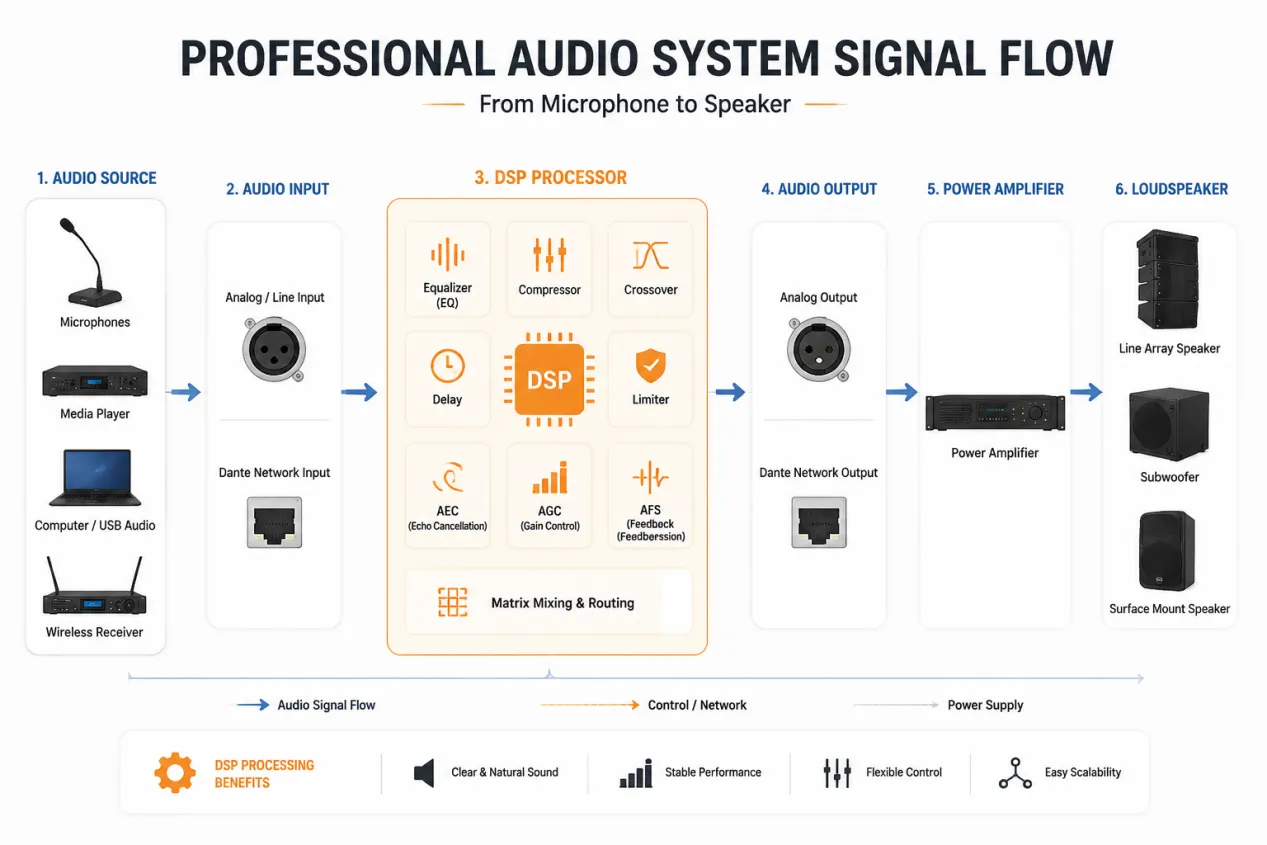
Correct wiring is one of the most important parts of professional audio installation.
A typical audio signal path may include:
Microphone
↓
Audio Input Device
↓
DSP Audio Processor
↓
Power Amplifier
↓
Speaker System
During installation, engineers need to correctly connect:
· Analog audio inputs and outputs
· Dante network audio connections
· USB audio interfaces
· Control interfaces such as RS232, RS485, and GPIO
Incorrect wiring can cause problems including:
· No audio output
· Signal interference
· Channel mismatch
· Ground noise
· System instability
4. DSP Configuration and System Optimization
Modern professional audio systems rely heavily on DSP technology to achieve precise audio control.
After hardware installation, engineers configure the DSP system according to the project requirements.
Typical DSP configuration includes:
Equalization (EQ)
Adjusting frequency response to improve sound clarity and balance.
Delay Processing
Synchronizing speakers in different locations to maintain consistent sound timing.
Crossover
Managing frequency distribution between different speaker components.
Automatic Feedback Suppression (AFS)
Reducing microphone feedback problems in live environments.
Acoustic Echo Cancellation (AEC)
Improving communication quality in conference and video meeting systems.
Through DSP configuration, the audio system can be optimized for different environments and applications.
5. Network Audio Installation
With the development of Audio over IP (AoIP) technology, many professional audio systems now use network-based transmission.
Dante audio installation is a common solution for modern commercial projects.
A typical Dante audio system includes:
Dante Device
↓
Network Switch
↓
Computer with Dante Controller
↓
Audio System
Network audio installation requires:
· Proper network switch selection
· Correct IP configuration
· Stable Ethernet cabling
· Dante device discovery and routing
Compared with traditional analog systems, network audio provides:
· Flexible signal routing
· Long-distance transmission
· Easier system expansion
· Centralized management
Why Is Professional Audio Installation Important?
A professionally installed audio system provides several advantages.
Better Sound Quality
Proper equipment selection, wiring, and DSP tuning ensure clear and balanced audio performance.
Higher System Reliability
Professional installation reduces connection problems, signal interference, and unexpected failures.
Easier System Management
Modern DSP and network audio solutions allow centralized control and remote configuration.
Flexible Future Expansion
A well-designed system can support additional microphones, speakers, rooms, or network devices in the future.
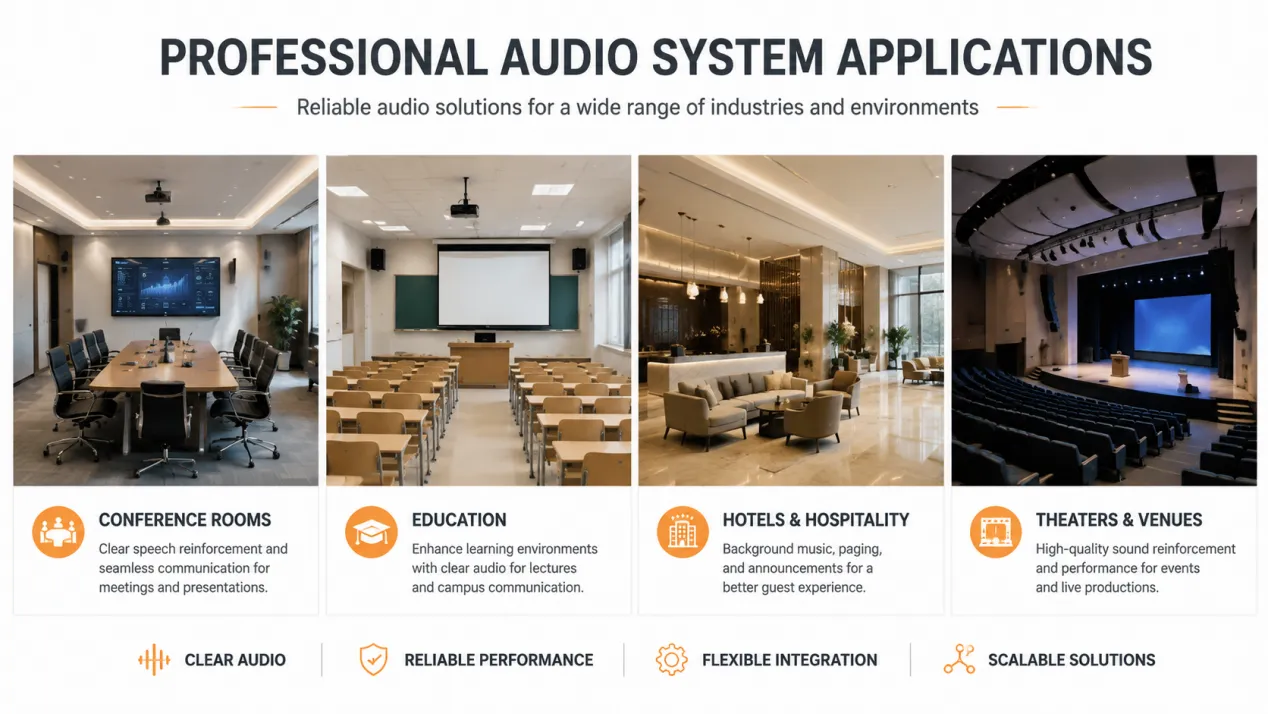
Professional Audio Installation Applications
Professional audio installation is widely used in many industries.
Corporate Conference Rooms
Professional installation enables:
· Clear speech reinforcement
· Video conference integration
· Echo cancellation
· Centralized audio control
Related products:
· Conference DSP Processor
· USB Audio Processor
· Dante Audio Processor
Education Facilities
Schools and universities use professional audio systems for:
· Classrooms
· Lecture halls
· Training centers
· Campus announcements
Hotels and Commercial Buildings
Commercial audio installation supports:
· Background music
· Paging systems
· Multi-zone audio distribution
Entertainment Venues
Professional audio installation is essential for:
· Theaters
· Performance venues
· Stadiums
· Event spaces
Professional Audio Installation vs Consumer Audio Setup
| Consumer Audio Setup | Professional Audio Installation |
| Designed for personal use | Designed for commercial environments |
| Simple connections | Complex system architecture |
| Limited control | DSP and network-based control |
| Fixed configuration | Flexible and expandable |
| Basic installation | Professional design and optimization |
Professional audio installation focuses not only on connecting equipment but also on achieving reliable performance in real-world environments.
Common Equipment Used in Professional Audio Installation
A complete professional audio system may include:
Audio Sources
· Microphones
· Media players
· Computers
· Conference terminals
Audio Processing Equipment
· DSP Audio Processors
· Digital Audio Matrix Processors
· Dante Audio Processors
Signal Distribution Equipment
· Network switches
· Audio interfaces
· Control systems
Output Equipment
· Power amplifiers
· Loudspeakers
· Speaker management processors
How FHB Audio Supports Professional Audio Installation
FHB Audio provides professional audio processing solutions designed for commercial AV applications.
Our product range includes:
· DSP Audio Processors
· Dante Audio Processors
· Digital Audio Matrix Processors
· Speaker Management Processors
These solutions support applications including conference rooms, education facilities, hotels, commercial buildings, and large-scale audio systems.
With professional DSP processing, flexible routing, and network audio capabilities, FHB Audio helps system integrators build reliable and scalable audio solutions.
Frequently Asked Questions
What is professional audio system installation?
Professional audio system installation is the process of designing, installing, connecting, configuring, and optimizing audio equipment for commercial and professional applications.
Why do professional audio systems need DSP?
DSP provides advanced audio processing functions such as EQ, delay, crossover, feedback suppression, and echo cancellation, helping achieve better sound quality and system stability.
What is the difference between analog and Dante audio installation?
Analog audio uses traditional physical signal connections, while Dante audio uses network technology to transmit digital audio signals with flexible routing and centralized management.
Who should install a professional audio system?
Professional audio systems should be installed by experienced AV engineers or system integrators who understand audio design, wiring, DSP configuration, and system testing.
Related Articles
· Basic Steps for Installing a Professional Audio System
· Common Mistakes During Audio System Installation
· DSP Signal Flow Installation Guide
· Dante Device Installation and Network Connection Guide
Related Products
· DSP Audio Processor
· Digital Audio Matrix Processor
· Dante Audio Processor
· Speaker Management Processor
Related Solutions
· Conference Room Audio Solution
· Education Audio Solution
· Commercial Building Audio Solution
Contact FHB Audio for professional audio system design and installation solutions.